Core Pillar 01

LncRNA and miRNAs in Cancer

We investigate the diverse roles of long non-coding RNAs and microRNAs in cancer, focusing on how they regulate gene expression, cellular plasticity, tumour progression, and therapy resistance. Our special focus includes MALAT1, NEAT1, MEG3, HOTAIR, H19, and miR-21, with the aim of deciphering their regulatory networks and identifying RNA-driven vulnerabilities that can be therapeutically explored.
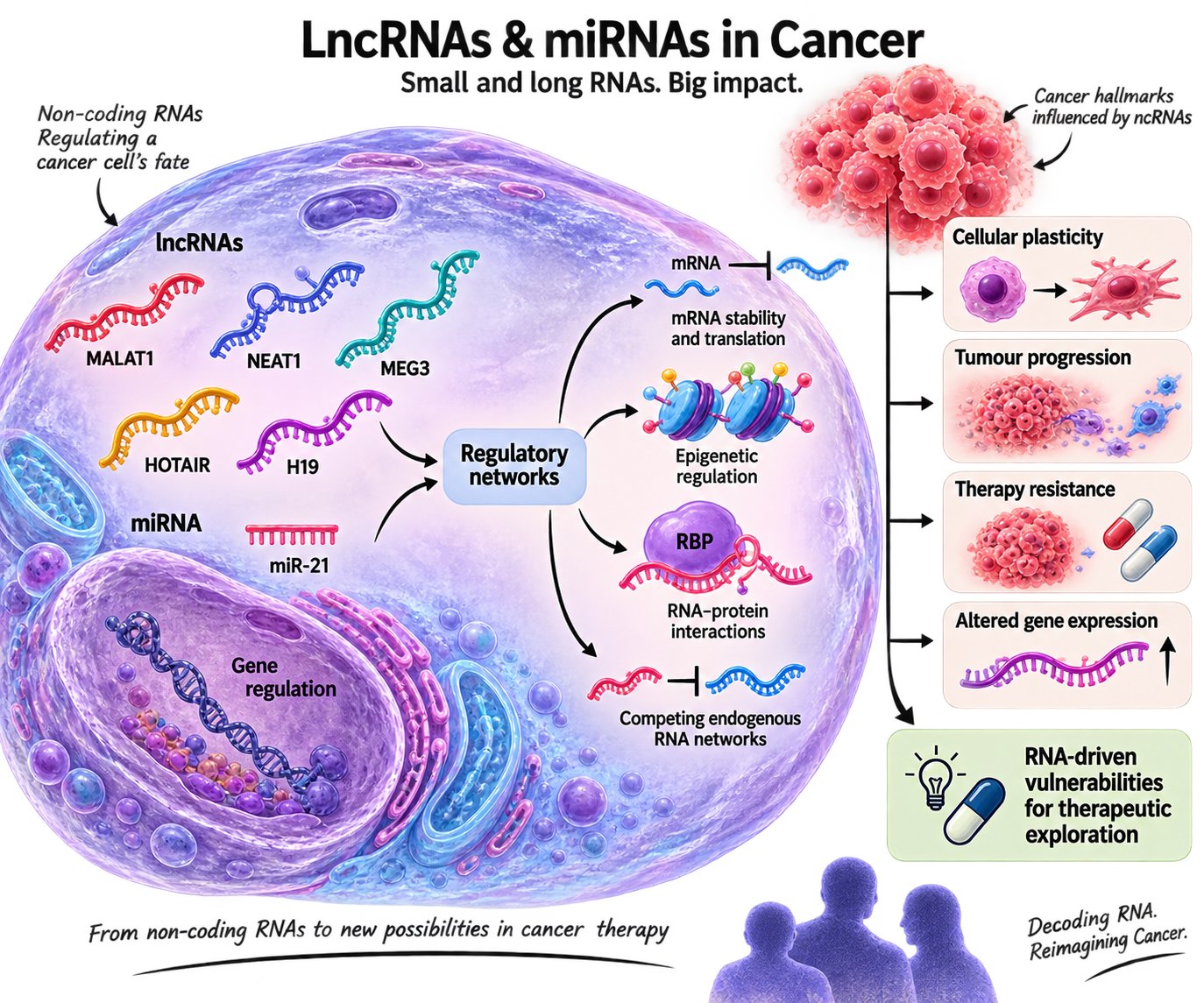
LncRNAs and miRNAs in cancer

Core Pillar 02

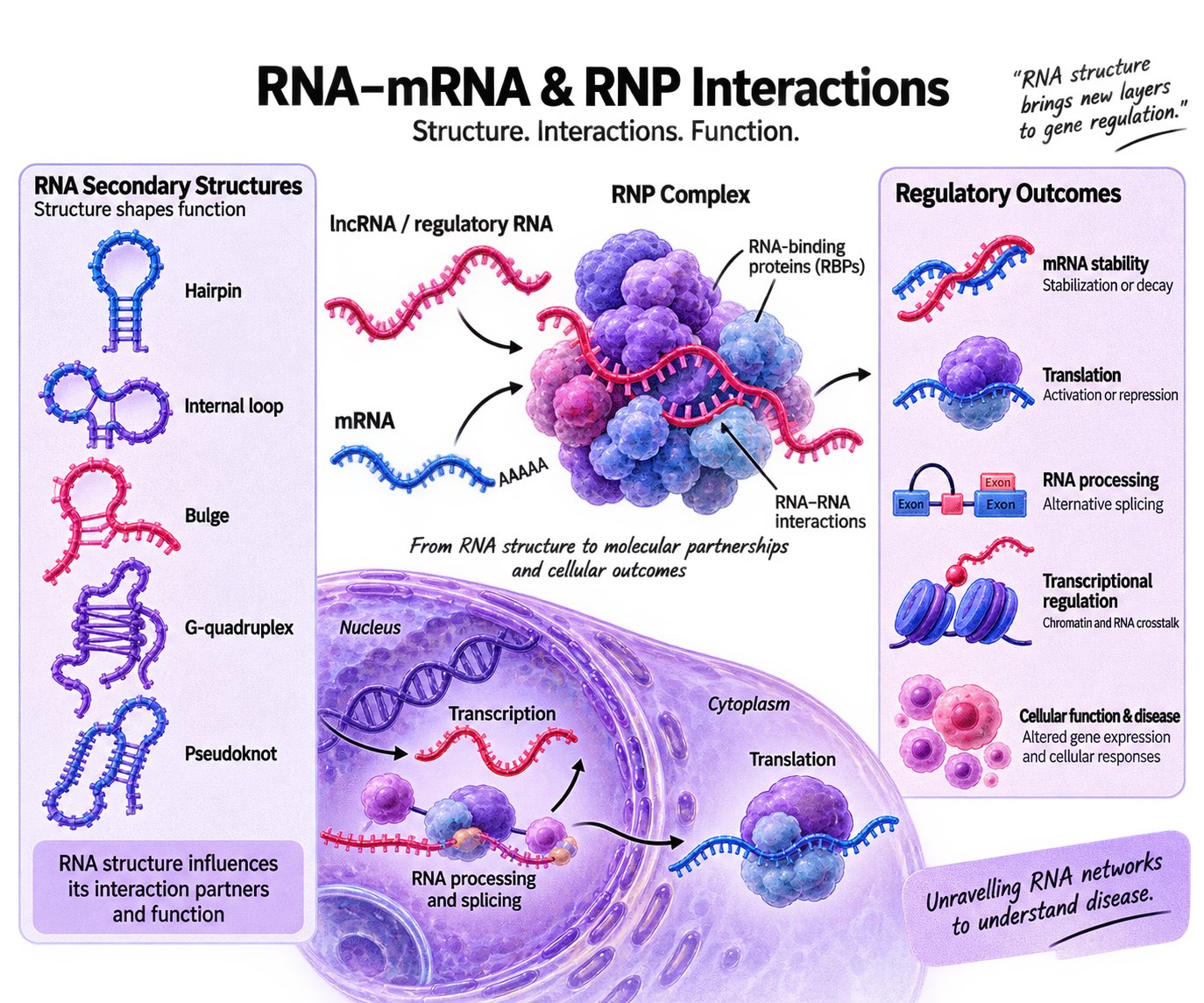
Understanding key RNA-mRNA pairs and RNP interactions

We seek to understand how RNA molecules interact with mRNAs and RNA-binding proteins (RBPs) to establish complex regulatory networks governing cellular function and disease. A particular focus of our work is the relationship between RNA secondary structures and RNP formation, exploring how structural features of RNA influence molecular interactions, RNA fate, and downstream cellular responses.

RNA-mRNA and RNP interactions

Core Pillar 03

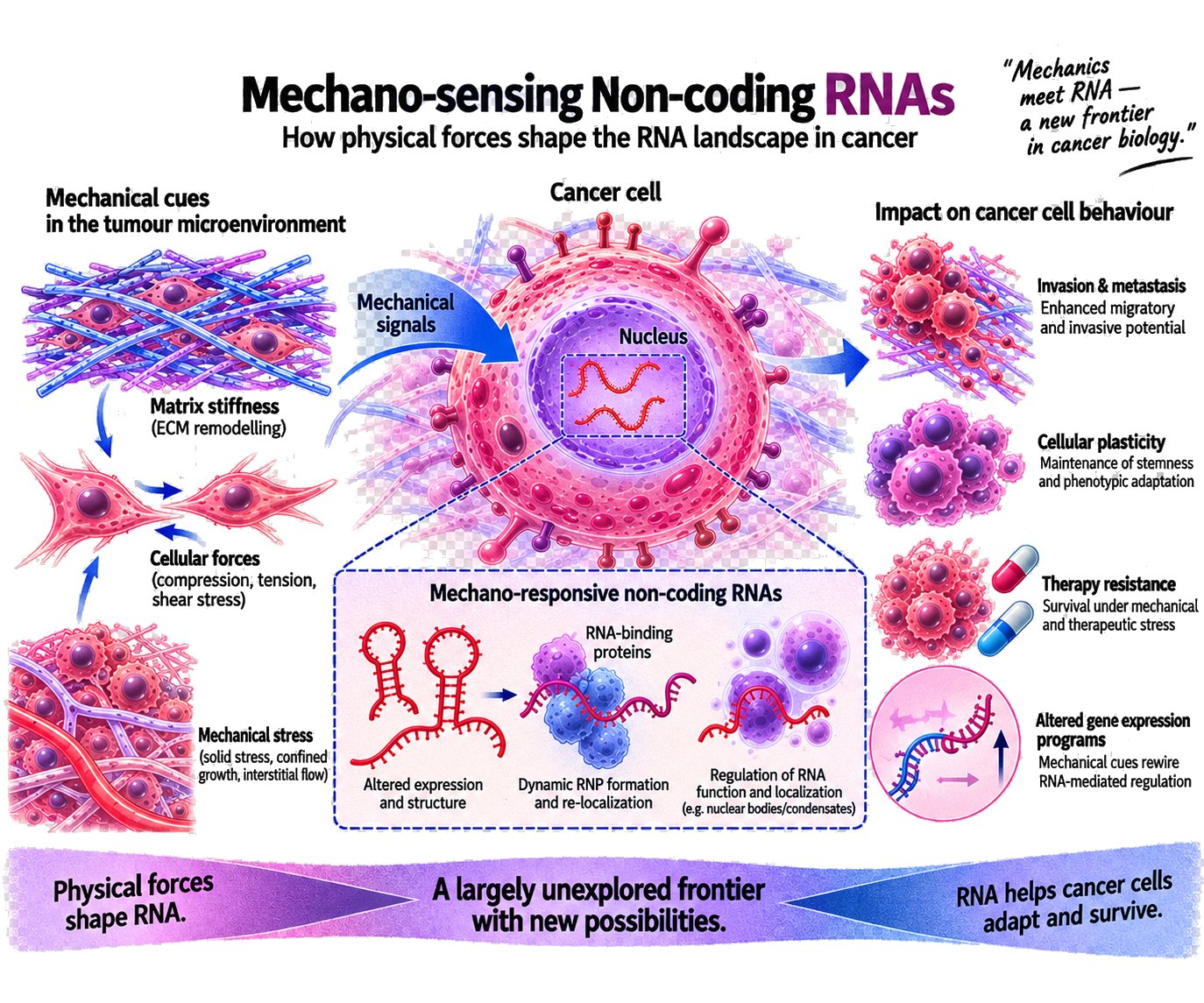
Mechano-sensing non-coding RNAs

The intersection of mechanobiology and RNA biology remains a largely unexplored frontier. We investigate how mechanical cues from the tumour microenvironment - including matrix stiffness, cellular forces, and mechanical stress - regulate non-coding RNAs. A key emphasis of our research is to discover and unravel mechano-sensing lncRNAs and understand how these previously underexplored RNA-mediated mechanisms enable cancer cells to sense, adapt to, and respond to their physical environment.

mechano-sensing non-coding RNAs

Core Pillar 04

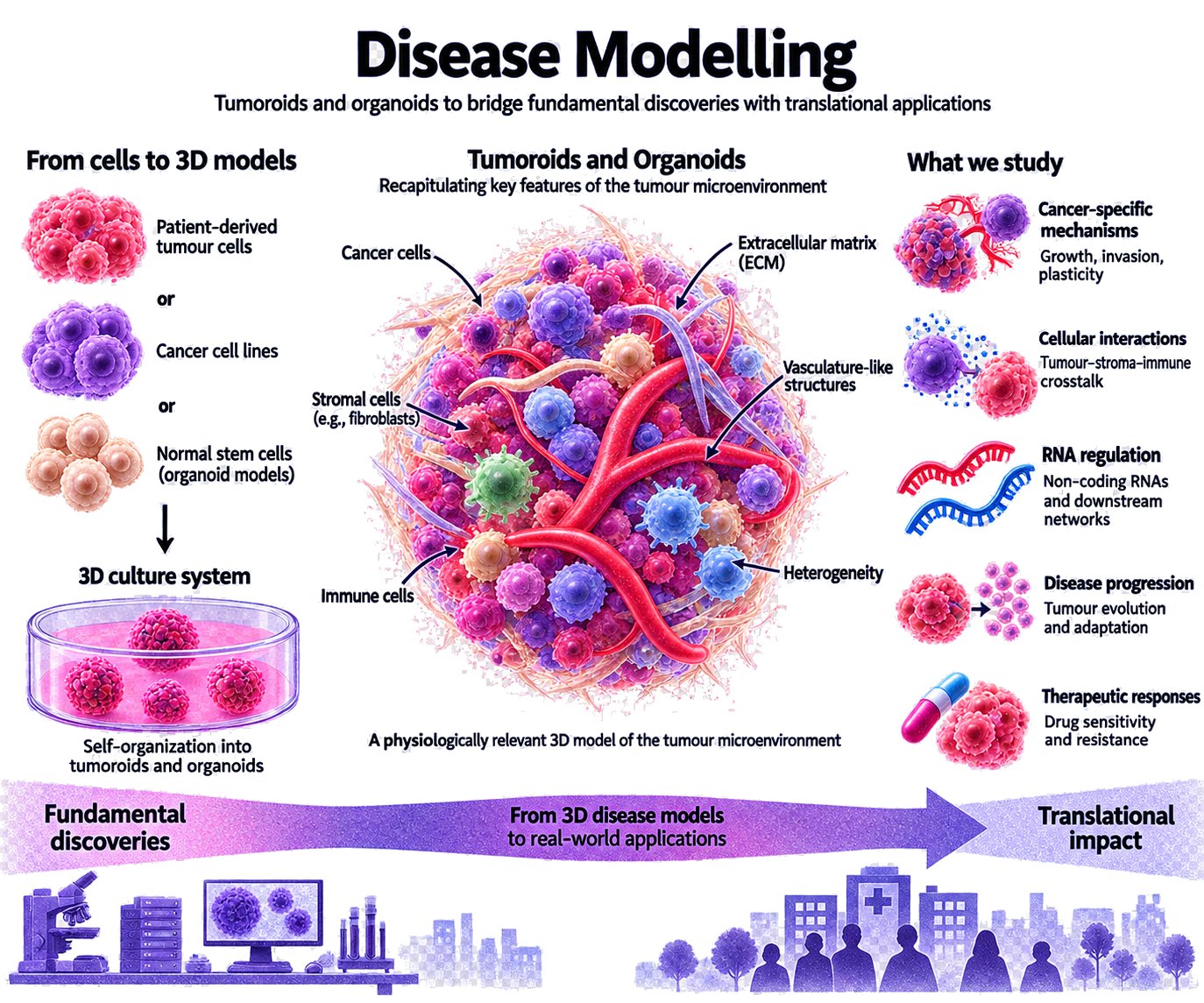
Disease modelling

We develop tumoroid and organoid models of specific cancer types to recreate key features of the tumour microenvironment in physiologically relevant systems. These models enable us to investigate cancer-specific mechanisms, cellular interactions, RNA regulation, disease progression, and therapeutic responses, while providing a platform to bridge fundamental discoveries with translational applications.

disease modelling

Partnerships

Collaborative Research at DEAR Lab

  1. 01

    Prof. Abhijit Majumder

    Dept. of Chemical Engineering, IIT Bombay

    Mechano-sensing and cancer resistance.

  2. 02

    Prof. Kasturi Saha

    Dept. of Electrical Engineering, IIT Bombay

    1. Nitrogen-vacancy (NV) nanodiamond (ND) based quantum biosensing to detect cancer resistance.
    2. NV-ND tagged lncRNA probes to detect structural shifts in cancer progression.
  3. 03

    Prof. Mohit Kumar Jolly

    Centre for BioSystems Science and Engineering, IISc Bangalore

    Mechano-sensing lncRNA transcriptomics study in glioblastoma.

  4. 04

    Dr. Gollapalli Pavan

    Dept. of Bioinformatics and Biostatistics, NUCSER, Nitte (Deemed to be University)

    Single-cell transcriptomics to decipher cell-population-specific effects in glioblastoma.

  5. 05

    Prof. Archa Fox

    University of Western Australia (UWA) - Medical School, UWA Centre for Medical Research, School of Human Sciences; Australian Centre for RNA Therapeutics in Cancer

    Mechano-sensing NEAT1 lncRNA and paraspeckle biology in glioblastoma.

  6. 06

    Prof. Kalicharan Sharma

    Dept. of Pharmaceutical Chemistry and Analysis, ISF College of Pharmacy, Moga

    Small-molecule based therapeutic targeting to block angiogenesis in breast cancer.

  7. 07

    Dr. Nandini Verma

    ACTREC, Tata Memorial Centre

    LncRNAs in breast cancer.

Research collaborations

ACTREC, Tata Memorial Centre
The University of Western Australia
Indian Institute of Science, Bangalore
Indian Institute of Technology Bombay
ISF College of Pharmacy, Moga
NUCSER, NITTE (Deemed to be University)

DEAR Lab funding is from:

NITTE (Deemed to be University)
Anusandhan National Research Foundation (ANRF)
Vision Group on Science and Technology (VGST), Karnataka Science and Technology Promotion Society (KSTePS)